Independent reviews•We buy everything we test•Updated February 2026
How we test
We test every watercolor paper and sketchbook using a standardized process. Each surface goes through six tests: a flat wash for even coverage, wet-on-wet for blending, glazing for layering, lifting for error correction, scrubbing for durability, and dry brush for texture. We use the same pigments — Daniel Smith Ultramarine Blue and Burnt Sienna — and the same brushes across all papers, so the only variable is the paper itself. Testing happens over multiple sessions to account for humidity and temperature differences, and every product is purchased with our own money.
Pro Art Artist White Tape is purpose-built for fine art applications, and it shows. The acid-free adhesive makes it one of the few masking tapes you can confidently use on work destined for framing and long-term display without worrying about yellowing or chemical migration.
Acid-free adhesive is safe for archival watercolor work
Produces exceptionally sharp, clean edges with no bleed
Removes without tearing paper fibers on cold-press and hot-press surfaces
Pro Art Artist White Tape is purpose-built for fine art applications, and it shows. The acid-free adhesive makes it one of the few masking tapes you can confidently use on work destined for framing and long-term display without worrying about yellowing or chemical migration. Where this tape truly excels is edge quality. When properly burnished onto watercolor paper, it creates razor-sharp borders that remain intact even through heavy wet-on-wet washes. The adhesive strikes an ideal balance: strong enough to resist paint creep, yet gentle enough to peel away cleanly from 140lb cold-press and hot-press papers. The white color is a practical advantage over blue or green alternatives, as it lets you visualize the final composition without visual distraction. For plein air painters or anyone working quickly, note that prolonged exposure to very wet conditions can weaken the bond slightly, so it works best when you let washes dry between layers near the taped edge. If you are producing work for exhibition or sale and need both performance and archival safety in the same tape, this is the one to reach for. Artists who just need a quick border for practice work will find it a little expensive for casual use.
Pros
Acid-free adhesive is safe for archival watercolor work
Produces exceptionally sharp, clean edges with no bleed
Removes without tearing paper fibers on cold-press and hot-press surfaces
White color blends seamlessly with paper borders
Cons
Slightly more expensive than general-purpose painter's tape
Can lose adhesion if left on wet paper for extended periods
Limited width options compared to multi-pack alternatives
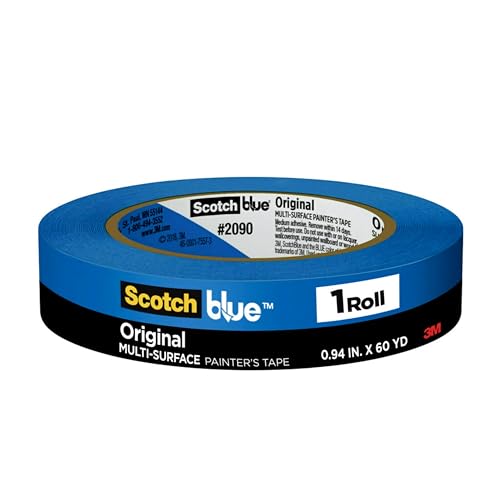
ScotchBlue Original Painter's Tape is the workhorse of watercolor masking. Originally designed for house painting, it has earned a loyal following among watercolorists for its reliable performance and unbeatable availability. The medium-tack adhesive bonds firmly enough to prevent pigment from bleeding under the edges, which is important when you want crisp borders on your paintings. On cold-press and hot-press papers from major brands, it removes cleanly even after several hours of drying time. Artists working with softer handmade or mould-made papers should apply it gently and avoid burnishing it down too hard, as the adhesive can lift surface fibers upon removal. It is not acid-free, so it should not remain on finished artwork intended for archival storage. For everyday studio work, sketching borders, and masking straight edges during washes, ScotchBlue performs reliably at a fraction of the cost of specialty art tapes. Its 14-day clean removal window gives you plenty of working time across multi-session paintings. It is the tape to reach for first when you need something dependable, inexpensive, and easy to find.
Pros
Removes cleanly from most watercolor papers without tearing
Widely available at any hardware or art supply store
Excellent adhesion prevents paint bleed on smooth and cold-press surfaces
Affordable price point for frequent use
Cons
Not acid-free, so avoid leaving it on finished archival work long-term
Can pull fibers from soft or handmade papers if pressed too firmly
Slightly too aggressive for very delicate surfaces
Crepe paper with pressure-sensitive rubber adhesive
Sizing
N/A
Format
Multi-pack with three width options
Acid-Free
No
Mould-Made
No
Price
$5–$8
Rating
8.2
The Mr. Pen Masking Tape Set is a smart purchase for watercolor artists who want versatility without buying three separate rolls. The pack includes half-inch, one-inch, and two-inch widths, which covers nearly every masking scenario in the studio. The narrow half-inch tape is particularly useful for masking thin highlights, window frames in architectural sketches, or any fine detail work where standard one-inch tape feels too bulky. The two-inch tape works well for securing paper borders to a board. Adhesion is moderate and generally suited to watercolor work. On standard cold-press papers like Canson XL or Strathmore 400 series, it holds firmly enough to prevent most bleed and removes cleanly within a reasonable timeframe. On heavily textured or rough papers, you may see slight pigment seepage along the edges. The adhesive is not acid-free, so peel it away from finished paintings before storage. We have found this multi-pack is especially practical for students and hobbyists who go through paper quickly and do not want to spend more than necessary on tape. For anyone working through paper quickly, this multi-pack has the best cost-per-yard ratio in this category and keeps your supply drawer organized with one product instead of three.
Pros
Three different widths in one pack cover virtually every masking need
Excellent value per yard compared to buying individual specialty rolls
Clean removal on most cold-press and hot-press watercolor papers
Half-inch width is perfect for masking fine details and thin borders
Cons
Not acid-free, so avoid prolonged contact with archival work
Adhesion can vary slightly between rolls in the same pack
Generic adhesive may allow minor bleed on very rough-textured papers
Brown kraft paper with water-activated gum arabic adhesive
Sizing
N/A
Format
82-foot roll
Acid-Free
No
Mould-Made
No
Price
$6–$12
Rating
8
Art Advantage Gummed Tape serves one purpose exceptionally well: stretching watercolor paper. The water-activated gum arabic adhesive bonds firmly to both the paper and your stretching board once dampened, holding sheets flat through even the most aggressive wet-into-wet techniques. This is the traditional method that studio watercolorists have relied on for decades, and this tape handles it reliably. To use it, soak your watercolor paper, lay it on a clean board, wet strips of gummed tape, and press them over the paper edges. As everything dries together, the paper pulls taut and stays flat throughout your painting session. The 2-inch width provides generous overlap, ensuring the bond holds even on heavier 300lb sheets. The kraft paper backing is stiff and holds its shape during application, which makes positioning easier than with thinner tapes. The main limitation is that this is a single-purpose product. It is not suited for masking edges or creating compositional borders, as the adhesive is far too aggressive for clean removal from a painted surface. It is also not acid-free, so trim it away from finished pieces before storing or framing. For artists who stretch paper regularly, this tape is essential and the 82-foot roll gives you plenty of yardage per purchase.
Pros
Water-activated adhesive creates an extremely strong bond for stretching paper
Wide 2-inch format provides ample coverage to secure paper edges to boards
Ideal for traditional paper stretching technique used by professional watercolorists
Cons
Not acid-free, unsuitable for permanent contact with finished artwork
Requires wetting before application, adding an extra step to the process
Flatback paper with low-tack repositionable adhesive
Sizing
N/A
Format
Single roll
Acid-Free
Yes
Mould-Made
No
Price
$6–$10
Rating
7.8
Hippie Crafter Artist Tape fills a useful niche for watercolorists who frequently adjust their masking during the painting process. The low-tack repositionable adhesive lets you peel up the tape and reposition it without tearing paper fibers or leaving sticky residue behind. This makes it useful for experimental compositions where you might change your mind about borders or masked areas midway through a session. The acid-free formulation is a welcome bonus, meaning you can use it on artwork intended for exhibition or sale without worrying about long-term chemical damage. On the performance side, the trade-off for repositionability is reduced holding power. The adhesive does not grip as firmly as standard painter's tape, so heavy wet-on-wet washes can seep underneath and compromise edge sharpness. For drier techniques, controlled washes, and layered glazing, it performs well. It tears cleanly by hand, which speeds up the masking workflow considerably. Artists who value flexibility over absolute edge precision will appreciate this tape, particularly for watercolor journaling, plein air studies, and preliminary compositions where the masking plan evolves as the painting develops. If you need hard, paint-resistant edges for precise architectural or botanical work, choose a firmer-tack option instead.
Pros
Repositionable adhesive allows adjustments without damaging the paper surface
Acid-free formula is safe for archival watercolor artwork
Extremely gentle removal leaves no residue on delicate papers
Easy to tear by hand for quick studio application
Cons
Lower tack means heavier wet washes can bleed under the edges
Repositionable adhesive weakens noticeably after multiple lifts and re-applications
Less effective at creating crisp borders compared to firmer-tack alternatives
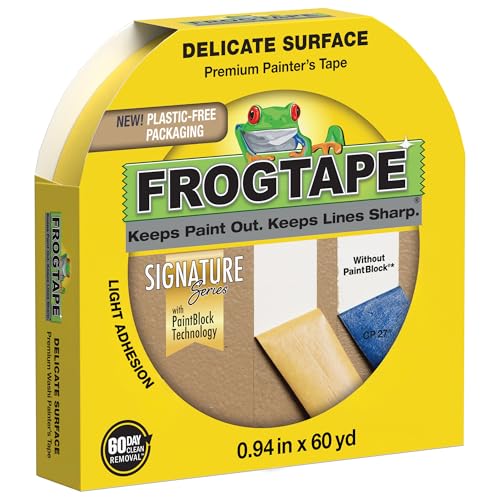
FrogTape Delicate Surface brings an interesting innovation to watercolor masking with its PaintBlock Technology, a polymer that reacts with moisture to form a micro-barrier along the tape edge. In practice, this feature helps reduce bleed when you are working with moderately wet washes, though extremely fluid applications can still seep underneath. Where this tape genuinely shines is on delicate and textured surfaces. The low-tack adhesive was designed for freshly painted walls, but it translates well to watercolor paper. It removes cleanly from cold-press, rough, and even some handmade papers without lifting fibers, which is a real advantage over more aggressive tapes. The 1.41-inch width gives slightly more border coverage than standard 1-inch options. The yellow-green color is easy to see against white paper, helping you position it accurately. It is not acid-free, so it should not be left in contact with finished artwork. For artists who need gentle removal above all else, particularly on textured or soft papers, FrogTape Delicate is a solid alternative to standard blue tape. If you are working on smooth hot-press paper and prioritize sharp edge control, a firmer-tack tape will serve you better.
Pros
PaintBlock Technology forms a micro-barrier that reduces paint bleed at edges
Delicate surface formula removes cleanly from textured watercolor paper
Wider 1.41-inch format offers more coverage than standard 1-inch tapes
Low residue even after extended application times
Cons
Not acid-free, limiting its use on archival artwork
PaintBlock feature works best with thicker paints and may be less effective with very watery washes
Higher price per roll than basic painter's tape options
MT Washi Tape is beloved in the journaling and crafting world, and it has a niche role in watercolor as well, though with clear limitations. Made from traditional Japanese washi rice paper, this tape is acid-free and extremely gentle on surfaces. It peels off watercolor paper with zero fiber damage, making it excellent for temporarily holding paper in place or marking light compositional guides. The semi-transparent quality lets you see pencil lines underneath, which is handy during the sketching phase. As a masking tool for watercolor painting, though, it falls short. The low-tack adhesive does not bond tightly enough to prevent pigment from seeping underneath, particularly during wet washes. You will not get the clean, sharp edges that dedicated painter's tape provides. Where washi tape does work well is for decorative borders on finished pieces, holding reference photos to your board, or adding visual accents to mixed-media work. At its low price point, it is worth keeping a roll in your supply kit for these secondary uses. Reach for it when you need something gentle and decorative. Skip it if you need reliable edge control during active painting.
Pros
Acid-free and safe for use on archival watercolor paper
Ultra-low tack removes effortlessly without damaging any paper surface
Semi-transparent quality allows you to see underlying sketch lines
Cons
Low adhesion means paint bleeds under the edges during wet washes
Not suitable for creating crisp masked borders
Narrow width limits use to small-scale masking or decorative borders
Not all tape serves the same purpose in watercolor painting. Understanding the categories prevents expensive mistakes.
Artist tape, the white low-tack variety, is purpose-built for masking borders on watercolor paper. It removes cleanly without tearing the surface, holds a reasonably sharp edge against wet washes, and leaves no residue. Pro Art Artist White Tape and Hippie Crafter Artist Tape both fall into this category, though they differ in tack level and flexibility. If border masking is your primary use, this is where to start.
Painter's tape (blue or green) was designed for house painting, but the low-tack formulations work surprisingly well on watercolor paper. ScotchBlue Original is the most widely used option among watercolorists. FrogTape Delicate Surface is the gentlest painter's tape available and works well on thinner or more delicate papers. It costs a bit more than ScotchBlue but is worth it if you are working on lighter student-grade sheets.
Gummed tape, the brown water-activated kind, serves a completely different function. You do not use it for masking edges. Gummed tape is for stretching watercolor paper: you soak the sheet, lay it on a board, and tape the edges down with moistened gummed tape. As the paper dries, it shrinks taut against the tape, giving you a flat, buckle-free surface for heavy washes. Art Advantage Gummed Tape is the standard choice. Nothing else does this job reliably.
Washi tape is a thin, decorative Japanese tape with very low adhesion. It will not hold a sharp edge against a loaded wash, but it works well for light masking, creating decorative borders, and temporarily holding reference sketches in place. It is the safest option for delicate or thin papers where you are worried about tearing on removal.
Masking vs stretching: different tools for different jobs
These two tasks require completely different tape properties, and confusing them is a common mistake among newer painters.
For border masking, you need a tape that balances two competing demands: enough adhesion to seal the edge against wet paint, but low enough tack to release without tearing the paper surface. Artist white tape and painter's tape strike this balance. The adhesive must resist water without dissolving or migrating, and the tape backing must be rigid enough to create a straight line.
For paper stretching, adhesion is everything. Gummed tape bonds to wet paper through a water-activated starch adhesive that dries rigid and holds the paper under significant tension as it shrinks. Painter's tape and artist tape will fail at this job because their pressure-sensitive adhesives cannot resist the pulling force of drying paper. If you work with lighter paper weights that tend to buckle, stretching with gummed tape is worth the extra setup time.
A middle-ground approach many professionals use: skip stretching entirely by using 300 lb paper (which stays flat under heavy washes) and reserve your artist tape strictly for border masking. This saves time and eliminates the stretching step, though the paper cost is significantly higher.
How to apply tape without damaging paper
The number one cause of tape damage is not the tape itself but how you apply and remove it. Follow these steps and you will avoid tearing, even on lighter-weight sheets.
Before applying, make sure the paper surface is completely dry and free of graphite dust or eraser debris. Any particles trapped under the tape will create gaps where paint seeps through and can also cause the tape to bond unevenly.
When applying, lay the tape down in one smooth motion. Do not stretch the tape as you apply it, since stretching causes it to contract and lift at the edges later. Press the inner edge firmly using a bone folder, burnishing tool, or the flat side of a palette knife. This step is what prevents paint bleed. On textured cold press paper, run the burnishing tool along the tape edge at least twice to push the adhesive into the paper's valleys.
When removing, always wait until your painting is completely dry. Patience here prevents smearing and tearing. Pull the tape back on itself at a 45-degree angle, moving slowly and steadily. Never yank tape straight up off the paper. If you feel resistance, stop and use a craft knife to gently score along the tape edge before continuing. On delicate or wood-pulp papers, applying gentle heat from a hair dryer for a few seconds can soften the adhesive and make removal easier.
For painters just starting out who are working with student-grade paper, we recommend starting with washi tape or the lowest-tack artist tape you can find. Student papers have weaker surface sizing and tear more easily than professional cotton sheets. For a broader look at which papers hold up best under tape removal, see our beginners guide.
Tape tips for cold press vs hot press paper
The surface texture of your paper changes how tape performs significantly, and most tape reviews ignore this entirely.
Cold press paper has a textured, dimpled surface. That texture creates tiny air channels between the tape adhesive and the paper, which means paint will always find a way to micro-bleed under the edge. You can minimize this by pressing the tape edge firmly into the texture with a burnishing tool, but achieving a perfectly crisp line on cold press is nearly impossible with any tape. For the cleanest results, use ScotchBlue or Artist White Tape with heavy burnishing and accept that a slight soft edge is part of the medium's character. Our cold press paper guide discusses how texture grades affect edge definition.
Hot press paper has a smooth, pressed surface that allows tape to make full contact with the sheet. This means sharper edges, less bleed, and cleaner borders. On hot press paper, even basic painter's tape can produce gallery-quality masked edges. The tradeoff is that the smooth surface also means the adhesive bonds more aggressively, so you need to be more careful during removal. Low-tack artist tape is the safest choice on hot press.
Rough paper is the most challenging surface for tape. The deep texture makes full adhesive contact impossible, and significant paint bleed is guaranteed under any tape. If you work on rough paper and need clean borders, consider liquid masking fluid for the critical edges instead. Tape can still hold the paper to your board, but rely on masking fluid for the painted boundary.
One final technique worth knowing: if you need a razor-sharp line on any texture, apply your tape, then paint a thin line of clean water along the tape edge and let it dry. This swells the paper fibers slightly and closes the micro-gaps between tape and surface. Some artists go further and seal the tape edge with a thin coat of clear gesso or matte medium before painting. These extra steps are only worth the effort for work headed to a gallery wall, but when the result matters, they make a visible difference. For more on how paper types affect your technique choices, our detailed guide covers the full spectrum of surface textures and their practical implications.
Frequently asked questions
What is the best tape for watercolor paper borders?
Pro Art Artist White Tape gives the cleanest edges for border masking. ScotchBlue Painter's Tape works well on most papers if you press the edges firmly to prevent paint bleeding underneath.
Will tape tear my watercolor paper?
It depends on the tape and paper. Low-tack tapes like artist tape and washi tape are safest for delicate surfaces. Always remove tape at a low angle and pull slowly. Wood pulp papers tear more easily than 100% cotton papers.
What tape should I use for stretching watercolor paper?
Gummed tape (also called gum tape or brown tape) is specifically designed for stretching. Art Advantage Gummed Tape is water-activated and bonds firmly when wet, holding paper in place while it dries taut.
Can I use regular masking tape on watercolor paper?
Regular masking tape has too much adhesive and will tear most watercolor paper when removed. Use painter's tape or artist-specific tape instead -- they are designed for clean removal.
How do I prevent paint from bleeding under tape?
Press the tape edge firmly using a bone folder or the back of a spoon. On textured cold press paper, some micro-bleeding is inevitable due to the surface texture. For the crispest lines, use hot press paper with a firm-adhesion artist tape.
Should I remove tape while the painting is wet or dry?
Remove tape when the painting is completely dry. Pulling tape from a wet painting risks tearing the paper and smearing paint. Remove slowly at a 45-degree angle, pulling away from the painted area.