Independent reviews•We buy everything we test•Updated February 2026
How we test
We test every watercolor paper and sketchbook using a standardized process. Each surface goes through six tests: a flat wash for even coverage, wet-on-wet for blending, glazing for layering, lifting for error correction, scrubbing for durability, and dry brush for texture. We use the same pigments — Daniel Smith Ultramarine Blue and Burnt Sienna — and the same brushes across all papers, so the only variable is the paper itself. Testing happens over multiple sessions to account for humidity and temperature differences, and every product is purchased with our own money.
Best overall hot press for fine detail and botanical illustration
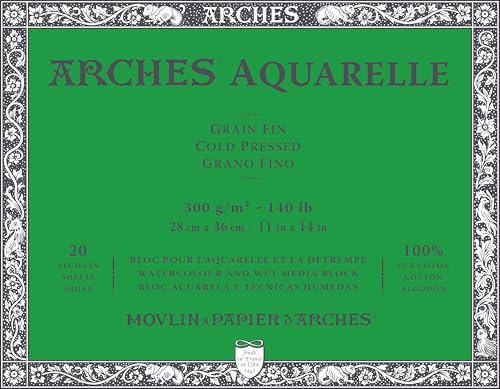
Arches Hot Press 140lb is built for painters who need a smooth, hard surface for fine detail work. The hot-pressed finish gives it a near-glassy feel compared to cold press, which makes it the natural choice for botanical illustration, architectural rendering, and portrait studies where a rough texture would get in the way.
Exceptionally smooth surface holds fine detail at a level cold press cannot match
Handles 5+ glazing layers with pigments staying distinct and clean between coats
Gelatine sizing allows pen and ink linework without feathering or bleed
Lifting is clean and precise, even on dried washes
Arches Hot Press 140lb is built for painters who need a smooth, hard surface for fine detail work. The hot-pressed finish gives it a near-glassy feel compared to cold press, which makes it the natural choice for botanical illustration, architectural rendering, and portrait studies where a rough texture would get in the way. Glazing works particularly well here. We built up five successive transparent layers of Quinacridone Gold and each one dried crisp and clean, with no muddiness between coats. The gelatine sizing is firm enough that pen and ink lines sit cleanly on top of dried watercolor washes without feathering, which opens up a lot of possibilities for mixed technique work. Lifting is also more precise on hot press than on cold press surfaces because there is no texture to trap pigment. A damp brush pulled clean highlights out of a dried wash with very little effort. The main trade-off is that the smooth surface leaves little room for error. On cold press, the grain breaks up brushstrokes and can disguise a shaky line. On hot press, every mark shows exactly as made. This paper is not ideal for practice sessions where you expect to rework areas heavily. It is also the most expensive format in the Arches range. Painters doing finished detail work, botanical illustration, or combined watercolor and ink pieces will get full value from it. Painters who work loosely and rely on texture for expressive effects should stick with cold press.
Pros
Exceptionally smooth surface holds fine detail at a level cold press cannot match
Handles 5+ glazing layers with pigments staying distinct and clean between coats
Gelatine sizing allows pen and ink linework without feathering or bleed
Lifting is clean and precise, even on dried washes
100% cotton mould-made construction is fully archival
Cons
Premium price makes it better suited to finished work than daily practice
Smooth surface is unforgiving of brush mistakes, hard edges are harder to disguise
Dries faster than cold press, requiring quicker decisions during wet-on-wet work
Fabriano Artistico Hot Press is a 100% cotton, mould-made sheet with fully synthetic sizing, which makes it one of the only professional-grade hot press papers that is completely vegan-friendly. The surface is very smooth with a faint warmth to its tone. That warmth is practically useful for portrait and figure work, where a cool-white base can make skin tones look harsh, and for botanical illustration, where it gives finished pieces a subtle glow. Pen and ink sit cleanly on the surface with no feathering, making it reliable for workflows that combine ink outlines with transparent watercolor washes. The paper holds up well under repeated wetting, and you can lift and scrub without the surface deteriorating quickly. Where Fabriano Artistico diverges from Arches is in absorption speed. The synthetic sizing lets pigment settle into the cotton fibers slightly faster than gelatine-sized sheets, which tightens the window for wet-on-wet manipulation. We find it requires a bit more decisiveness and pre-planning during complex passages. Beginners may need time to adjust. Color payoff is rich and transparent pigments achieve real luminosity. If you want a warm surface, vegan credentials, and pen compatibility in a single professional sheet, this paper is the right choice. Artists who need maximum wet-on-wet time for loose, wet techniques should test Arches first.
Pros
Vegan-friendly synthetic sizing appeals to ethically conscious artists
Smooth surface with a faint warm tone that flatters skin tones and botanical subjects
Excellent wet strength allows confident layering and glazing techniques
Slightly more affordable than Arches while maintaining professional quality
Cons
Synthetic sizing absorbs pigment faster than gelatine papers, shortening the wet-on-wet window
Some artists find the reduced working time challenging for large, complex passages
Limited availability in certain regions compared to Arches
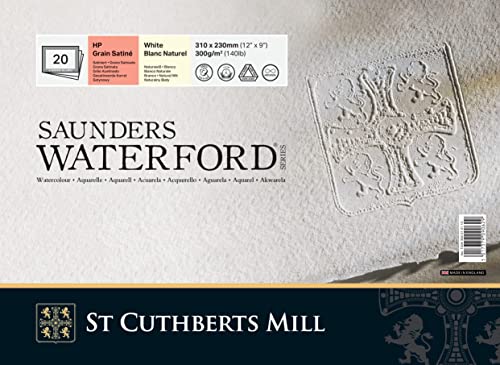
Saunders Waterford Hot Press is a quietly excellent paper that has earned a devoted following among watercolorists who prize smooth, even washes above all else. Manufactured at the historic St Cuthberts Mill in Somerset, England, each mould-made sheet benefits from a gelatine sizing applied with remarkable uniformity, giving the paper a consistent response across its entire surface. This translates directly into washes that dry without blotches, blooms, or uneven edges, a quality that is especially important for large-area skies, backgrounds, and graded transitions in portrait work. The bright white base is noticeably cooler than Fabriano Artistico, which can be a strength or a drawback depending on your subject matter. For botanical illustrators working with transparent pigments, the white base amplifies luminosity and keeps greens and blues looking fresh. Portrait painters who prefer warmth may want to test it first. The paper lifts cleanly when damp, making it forgiving for artists who like to pull back highlights or correct edges. Fine pen lines hold well on the surface, and the paper accepts technical pens and dip pens without bleeding, though very wet ink applications benefit from a brief drying pause before adding watercolor layers. At its price point, Saunders Waterford Hot Press delivers professional-grade performance that rivals papers costing considerably more, making it an excellent choice for artists who use hot press paper regularly.
Pros
Exceptionally even washes thanks to consistent gelatine sizing throughout the sheet
Bright white surface makes colors appear clean and vivid
Forgiving nature allows easy lifting and correction of mistakes
English mould-made quality with outstanding batch-to-batch consistency
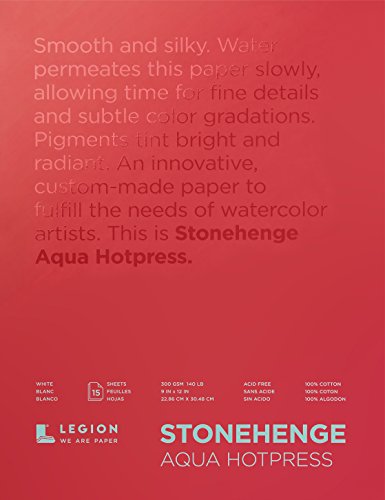
Legion Stonehenge Aqua Hot Press has carved out a loyal niche among artists who move fluidly between media. Built on the same 100% cotton base that made the original Stonehenge a printmaking favorite, this watercolor version adds synthetic internal and surface sizing that lets it handle wet washes without losing its affinity for dry media. The result is a genuinely versatile sheet where you can lay down precise ink lines, add watercolor glazes, then come back with colored pencil or graphite for finishing details, all on the same surface. For botanical illustrators who combine multiple tools in a single piece, that range of compatibility is a real practical benefit. The hot press surface is smooth and inviting, though side-by-side with Arches it feels marginally softer, a quality some artists prefer and others find less crisp for extremely fine linework. Washes flow evenly and colors dry true, with good luminosity on the natural white surface. The paper handles lifting reasonably well, though aggressive scrubbing can begin to disturb the fibers sooner than on heavier-sized European sheets. At its price point, Stonehenge Aqua Hot Press offers genuine professional quality at a cost that makes it practical for regular studio use. The main limitation is format availability: it ships in blocks and pads but not loose sheets, which may frustrate artists who work at larger scales or prefer to stretch their paper.
Pros
Handles watercolor, ink, graphite, and colored pencil on the same sheet without issue
Smooth surface takes fine detail well for botanical and architectural subjects
Vegan-friendly synthetic sizing with no animal-derived products
Competitive pricing for a 100% cotton professional paper
Cons
Not available in loose sheets, limiting large-format work options
Surface can feel slightly softer than European competitors under heavy scrubbing
Less established reputation in traditional watercolor circles compared to Arches or Fabriano
Strathmore 400 Series Hot Press fills an important role as the entry point into hot press watercolor painting. For students learning to control washes on a smooth surface, or for experienced artists who want an inexpensive sheet for testing compositions and color studies, it delivers a surprisingly capable experience at a fraction of the cost of cotton papers. The smooth surface is genuinely pleasant to work on with pen and ink, and light to moderate watercolor washes sit cleanly without excessive bleeding. This makes it a practical choice for illustrated journaling, quick botanical sketches, and classroom exercises where the goal is building technique rather than producing exhibition-quality work. The limitations of its wood pulp construction become apparent when you push it hard. Heavy wet-on-wet applications cause the paper to buckle more than cotton sheets, and the fibers can start to pill if you scrub or lift aggressively. Colors also lack the luminous depth that 100% cotton surfaces provide, since wood pulp fibers absorb and scatter light differently. For portrait work requiring smooth blending across large areas, the paper can feel uncooperative compared to premium competitors. At its price, though, it lets artists use hot press paper freely without worrying about cost, which is exactly the mindset needed for productive practice and creative experimentation. Buy it for practice, studies, and daily sketching. Move to cotton when a piece is meant to last.
Pros
Highly affordable price makes it ideal for daily practice and experimentation
Smooth surface works well for pen and ink with light watercolor washes
Acid-free construction ensures student work can be preserved long term
Widely available at art supply stores and online retailers
Cons
Wood pulp construction cannot withstand heavy wetting or multiple wash layers
Colors appear slightly duller compared to cotton papers due to fiber composition
Surface begins to pill with aggressive brushwork or lifting attempts
Reach for hot press when precision is the priority. The smooth surface lets your brush glide without catching on texture peaks, which means fine lines stay fine. A size 4 round on hot press can produce hairline veins on a leaf or individual eyelashes on a portrait. Cold press texture would scatter and interrupt those same marks.
Hot press also handles smooth, even washes of flat color well. Without surface texture to create granulation, washes dry uniform and clean. That consistency is important for illustration work where you need solid color fields as a base for detailed overpainting.
Pen and ink artists who add watercolor washes should seriously consider hot press. Technical pens and dip nibs glide across the smooth surface without snagging, and the watercolor wash sits on top cleanly without the ink feathering into textured valleys. Calligraphers working with watercolor lettering will find hot press indispensable for the same reason.
The trade-off is control. Water moves faster across hot press because there is no texture to slow it down. Wet-on-wet techniques require quicker decisions and more confident brush handling. If you are still building water control, the beginners guide explains why starting on cold press develops those skills before you move to smooth paper.
Hot press techniques that work well
Glazing on hot press produces strikingly luminous results. Because each layer sits on a smooth surface rather than settling into texture valleys, light passes through the paint layers and reflects off the white paper beneath with unusual clarity. Build up four or five transparent glazes of quinacridone or phthalo pigments on Arches hot press and the color depth is remarkable.
Controlled wet-on-wet on hot press creates soft gradients that look almost airbrushed. Pre-wet a section evenly, then touch in color with a loaded brush. The pigment spreads in smooth, continuous blooms without the granulated edges you get on textured paper. This technique is good for soft skin tones, out-of-focus backgrounds, and atmospheric skies.
Lifting is more predictable on hot press. Pigment sits on the surface rather than sinking into texture grooves, so a clean damp brush picks up color cleanly. Recovered whites are brighter and more defined than what you get on cold press. Gentle lifting does the job without the scrubbing that textured paper sometimes requires.
Dry brush works differently on hot press. Instead of skipping across peaks, your brush deposits a smooth, continuous stroke. Use a nearly dry brush with thick paint to create precise calligraphic marks. The effect is controlled and deliberate rather than the rough, broken texture cold press produces.
For weight considerations that affect how hot press handles water, see the paper weight guide. Hot press at 140 lb buckles faster than cold press at the same weight because the smooth surface has less structural resistance to moisture expansion.
Botanical illustration and fine detail
Botanical illustration is where hot press has a clear advantage. Painting a realistic flower requires layering dozens of small, precise glazes to build petal color from light to dark. Each glaze needs to dry with a clean edge, and the transitions between values need to be seamless. Cold press texture introduces visual noise that competes with careful brushwork. Hot press gets out of the way.
Serious botanical illustrators working on hot press typically layer this way: start with a pale wash of the local color, let it dry completely, then build form through successive glazes with increasingly concentrated pigment. On Arches hot press, you can stack eight or more glazes before the surface shows any sign of fatigue. Fabriano Artistico hot press handles similarly, with a slightly warmer white that many botanical painters prefer for flower studies.
Portrait painters benefit from hot press for the same reasons. Skin requires smooth value transitions. The gradient from highlight to shadow across a cheekbone should feel continuous, not stepped or granulated. Hot press lets you blend and soften edges with a damp brush in ways that textured paper resists. Professional watercolorists who focus on realism almost always keep hot press in the studio, even if cold press is their default for other subjects.
Making the switch from cold press
If you have painted exclusively on cold press, your first session on hot press will feel disorienting. The paint moves faster. Edges form more quickly. Your usual wet-on-wet timing will be off. That is normal, not a reason to give up on the surface.
Start small, a quarter sheet or even postcard size. Paint something simple with controlled washes rather than attempting a complex piece. Pay attention to how water behaves on the smooth surface. It pools differently, dries with sharper edges, and responds to brush pressure with more sensitivity than you are used to.
The most common mistake when switching is using too much water. On cold press, the texture absorbs and distributes excess moisture. Hot press has nowhere to hide it, so puddles form and dry with hard edges or bloom marks. Load your brush with less water than you think you need, then add more if the stroke feels dry. Within a few sessions, your muscle memory adjusts.
Saunders Waterford hot press is a good transition paper. It retains a subtle surface texture that slows water just enough to feel more familiar to cold press painters, while still delivering smooth precision. Once you are comfortable there, move to the dead-smooth surface of Arches or Fabriano for the full hot press experience.
Keep both surfaces in rotation. Many accomplished painters use cold press for expressive, textured work and hot press for precise, layered studies. Matching paper to subject is one of the more useful habits you can develop as a watercolorist.
Frequently asked questions
What is hot press watercolor paper best for?
Hot press excels at botanical illustration, detailed portraits, pen and ink with watercolor wash, and any technique requiring smooth, precise color application. The smooth surface allows fine brushwork without the texture of cold press interfering.
Is hot press harder to use than cold press?
Hot press is less forgiving because mistakes are more visible on the smooth surface and water moves faster across the paper. Wet-on-wet washes require more control. It rewards precise brushwork but can frustrate beginners.
Can I use hot press for landscapes?
Yes, though it produces a different look than cold press. Hot press landscapes have smoother, more blended washes without the textural grain. Some watercolorists prefer this smoother aesthetic.
Why is hot press paper more expensive?
Hot press requires an additional manufacturing step -- the paper is pressed through heated rollers to flatten the texture. This extra processing adds cost. The price difference is typically 10-20% more than the same brand's cold press.
Which hot press paper is closest to cold press in texture?
Saunders Waterford Hot Press has a very slight tooth compared to other hot press papers, making it more forgiving while still being smooth enough for detail work. It is a good transition paper for artists moving from cold to hot press.