Independent reviews•We buy everything we test•Updated November 2025
How we test
We test every watercolor paper and sketchbook using a standardized process. Each surface goes through six tests: a flat wash for even coverage, wet-on-wet for blending, glazing for layering, lifting for error correction, scrubbing for durability, and dry brush for texture. We use the same pigments — Daniel Smith Ultramarine Blue and Burnt Sienna — and the same brushes across all papers, so the only variable is the paper itself. Testing happens over multiple sessions to account for humidity and temperature differences, and every product is purchased with our own money.
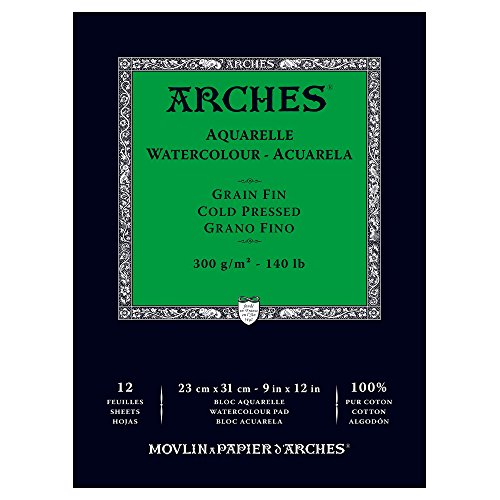
Arches Cold Press 140lb is the benchmark most watercolorists use when judging any other paper. During testing, the surface handled wet-on-wet techniques beautifully.
Exceptional wet strength allows extended wet-on-wet working time
Handles repeated lifting and scrubbing without pilling or surface damage
Even, predictable washes with smooth color gradients
Pigments stay bright and distinct through 6+ glazing layers
Arches Cold Press 140lb is the benchmark most watercolorists use when judging any other paper. During testing, the surface handled wet-on-wet techniques beautifully. We flooded it with clean water and dropped in concentrated pigment, and the color bloomed in smooth, controlled gradients without any unwanted hard edges. The gelatine sizing gives the surface a resilient quality that lets you lift color back to near-white even after a wash has fully dried, which is invaluable for correcting mistakes or pulling out highlights. We pushed it hard with a stiff bristle brush during scrubbing tests, and the fibers held together without pilling or tearing. Glazing is where this paper really excels: we layered six transparent washes and each one remained distinct, with no muddiness or color bleeding into layers below. The cold press texture provides enough tooth to grab pigment granulation in minerals like genuine ultramarine and raw umber, while still being smooth enough for detailed brushwork. Drying time felt consistent across the sheet, which tells us the sizing is applied evenly. The main downsides are price and the gelatine sizing, which rules it out for vegan painters. If budget allows, this is the paper to buy. If you are a student or paint casually, start somewhere cheaper and move up when the paper becomes a limiting factor.
Pros
Exceptional wet strength allows extended wet-on-wet working time
Handles repeated lifting and scrubbing without pilling or surface damage
Even, predictable washes with smooth color gradients
Pigments stay bright and distinct through 6+ glazing layers
Available in a wide range of formats and sheet sizes
Cons
Costs roughly 30-40% more per sheet than comparable professional papers like Fabriano Artistico
Gelatine sizing is not suitable for vegan artists
Slight batch-to-batch variation in sizing strength
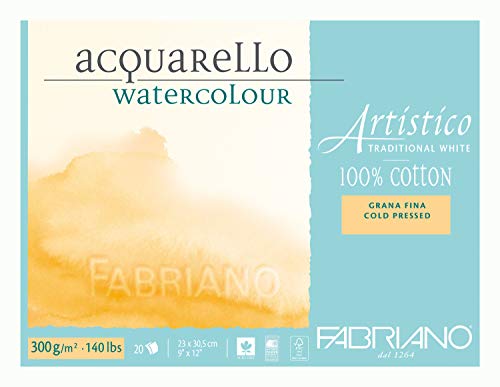
Fabriano Artistico is the paper we reach for when we want professional-grade cotton at a price that does not sting quite as much as Arches. The Artistico line uses synthetic sizing instead of gelatine, making it the go-to choice for vegan watercolorists. In our wet-on-wet tests, pigment flowed smoothly across the dampened surface with soft, feathered edges. The synthetic sizing absorbs water a bit faster than gelatine, so you do need to work slightly quicker, but the trade-off is a surface that feels almost velvety under the brush. Lifting was good but not perfect. We could pull color back cleanly within the first minute or so, but once dry, staining pigments locked in more firmly than on Arches. Glazing performed well through four or five layers before we noticed any muddying. Where this paper really shines is granulation: Daniel Smith Lunar Black separated into gorgeous particle textures in the cold press tooth. We also found it handled masking fluid without tearing when removed, though we would still recommend low-tack tape for edges. At roughly fifteen to twenty percent less than Arches per sheet, the Artistico is a strong choice for working painters who need reliable cotton paper without the top-tier price. Skip it if your practice depends heavily on lifting dried paint, where gelatine-sized papers have a clear edge.
Pros
Vegan-friendly synthetic sizing with no animal products used
Priced roughly 15-20% lower per sheet than Arches while performing at a professional level
Soft, absorbent surface is forgiving for wet-on-wet beginners
Excellent pigment granulation on textured surface
Handles masking fluid cleanly without tearing on removal
Cons
Less resistant to aggressive scrubbing than gelatine-sized papers
Colors can appear slightly more muted compared to Arches when dry
Dries a touch faster, narrowing the wet-on-wet working window
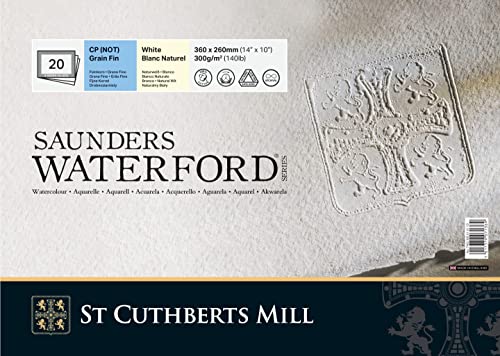
Saunders Waterford is made at St Cuthberts Mill in Somerset, England, and it has quietly built a loyal following among watercolorists who prize smooth, even washes above all else. In our testing, we laid down a large graded wash across a full imperial sheet and the color transitioned from concentrated to dilute without a single streak, backrun, or cauliflower bloom. The gelatine sizing is generous, giving you a long working window. We timed roughly eight to ten minutes of usable wetness on a dampened surface before it started to lose receptivity. Lifting was excellent: we pulled clean highlights out of a dried cerulean wash using a damp flat brush, and the paper surface stayed perfectly intact. For glazing, we built up five successive transparent layers of quinacridone rose and each layer read as distinct and luminous. The cold press texture here is a bit more subtle than Arches, which means granulating pigments separate less dramatically, but it also means detailed work with a rigger brush is very precise. The bright white base of the paper makes transparent pigments glow. Availability can be an issue if you are outside Europe, and prices have crept up in recent years. For painters who rely on wash-heavy techniques like skies and seascapes, this paper is hard to beat. If granulation and heavy texture are priorities, Arches may suit you better.
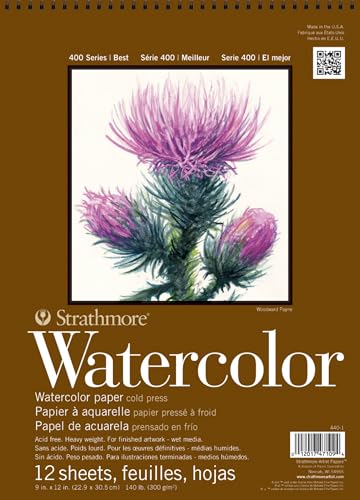
The Strathmore 400 Series is the pad we always recommend to students and beginners who want a reliable surface without the sticker shock of professional cotton papers. At under fifteen dollars for a twelve-sheet pad, you can paint freely, experiment, and make mistakes without feeling like you are burning money. During our tests, we found that light wet-on-wet washes went down smoothly. Soft sky gradients and simple background washes looked clean and even. The synthetic sizing gives the surface enough resistance that pigment does not just soak in immediately, which is reassuring for newer painters learning water control. Where the Strathmore 400 starts to show its limitations is with more demanding techniques. Aggressive scrubbing with a stiff brush caused the surface to pill after just a few strokes, and lifting dried color left behind a noticeable ghost rather than returning to clean white. Glazing worked for two or three layers, but beyond that the paper started to feel tired and muddy. Granulation effects are muted compared to cotton. The wood pulp fibers just do not have the same irregular texture that makes minerals sparkle. That said, for the price point, this paper punches well above its weight. If you are learning brush control, practicing value studies, or just want a worry-free sketchbook surface, the 400 Series is a solid starting point. Move up to cotton when the paper itself starts to hold your painting back.
Pros
Affordable enough for daily practice without worrying about wasting paper
Handles light wet-on-wet washes surprisingly well for wood pulp
Acid-free composition means paintings will not yellow over time
Widely available at craft stores and online retailers
Sturdy 140lb weight resists moderate buckling
Cons
Surface pills and tears under aggressive scrubbing or repeated lifting
Colors appear noticeably duller than cotton papers once dry
Limited wet working time, washes dry quickly and can leave hard edges
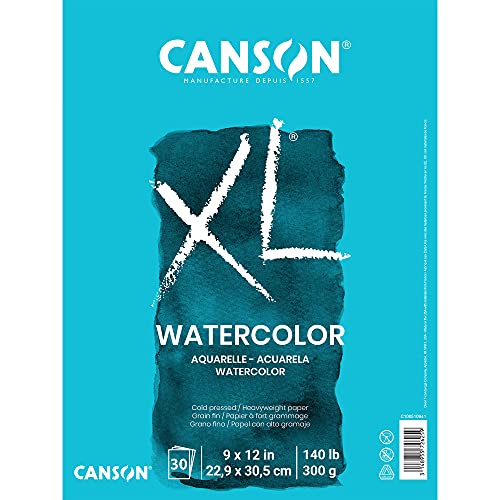
The Canson XL is the paper you grab when you need sheer volume at the lowest possible cost. With thirty sheets in the standard nine-by-twelve pad, it works out to well under fifty cents per sheet, which makes it ideal for warm-up exercises, thumbnail studies, and technique drills where outcome matters less than mileage. The cotton blend in the pulp does give it a marginal edge over pure wood pulp competitors. We noticed slightly better pigment adhesion and a touch more resilience when lifting, though the difference is subtle. Wet-on-wet washes spread reasonably well, but the paper dries fast, so you need to work quickly to avoid hard tide lines. We found that pre-wetting both sides and taping the sheet to a board helped enormously with buckling, which is otherwise the biggest annoyance here. Glazing is limited to two or three layers before the surface starts to feel overworked and gummy. Do not attempt aggressive scrubbing, the fibers tear almost immediately. Where the Canson XL earns its place is pure accessibility: it is stocked everywhere from big-box craft stores to grocery store art aisles, and the price means a complete beginner can go through dozens of sheets building confidence before spending more. Think of it as training wheels. It will teach you the basics of water control and pigment behavior, and once you feel ready, stepping up to cotton will feel like a major upgrade.
Pros
Lowest price per sheet of any paper in this roundup
Cotton blend gives a slight performance edge over pure wood pulp
Generous sheet count per pad, great for high-volume practice
Fold-over and spiral formats are convenient for plein air painting
Cons
Buckling is noticeable even with light washes unless taped down
Surface breaks down quickly with scrubbing or masking fluid removal
Colors dry noticeably duller than on professional-grade papers
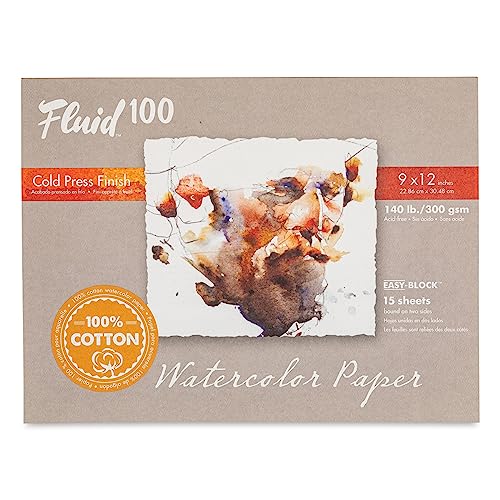
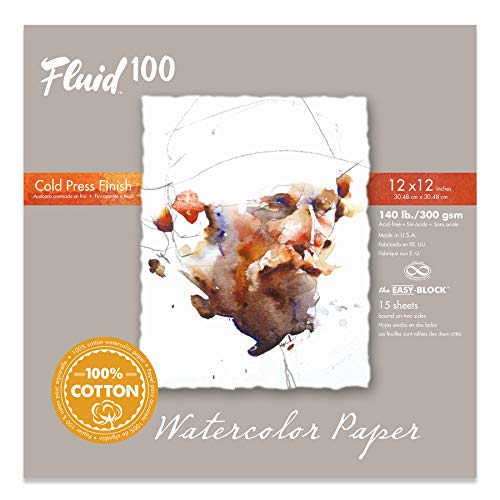
Blick Premier punches well above its weight class for a mid-range watercolor paper. After running it through a full battery of tests, we were genuinely impressed by how well it holds up under heavy wet-on-wet applications. We laid down three consecutive washes on a single area and the paper maintained its integrity without any sign of pilling or surface breakdown. The gelatine sizing does its job well, allowing us to lift color back to near-white even after the paint had dried for several minutes. Glazing works nicely here too, with transparent layers building up cleanly without disturbing what is underneath. Where the paper falls a bit short is in raw color intensity. Comparing side by side with Arches or Fabriano, pigments just do not land quite as brightly on the Blick Premier surface. Scrubbing is possible but you will hit the paper fibers faster than you would on a more heavily sized sheet. That said, for the price you are paying, these are minor compromises. The cold press texture has a pleasant, consistent tooth that takes detail work reasonably well without being overly rough. If you are an intermediate painter looking for real cotton paper without the premium price tag, this is one of the best options available. It is the paper we recommend most often to students moving up from cellulose. Note: Blick Premier is a Dick Blick exclusive and is not sold on Amazon. The link above redirects to the closest equivalent (Fluid 100 block). For the best price on Blick Premier, visit dickblick.com directly.
Pros
100% cotton mould-made paper priced 30-40% below Arches and Fabriano
Handles multiple wet-on-wet washes without pilling or warping
Gelatine sizing allows for clean lifting and corrections
Even color absorption with minimal pooling on flat washes
Cons
Slightly less forgiving with scrubbing compared to premium brands
Pigments dry a touch flatter than on Arches or Fabriano when compared side by side
Pad binding can make tearing out sheets cleanly a bit tricky
#7. Winsor & Newton Professional Watercolour Paper
Underrated Pro Pick
Technical specifications
Weight
140 lb (300 gsm)
Texture
Cold Press
Material
100% Cotton
Sizing
Gelatine
Format
Block, Pad, Loose Sheets
Acid-Free
Yes
Mould-Made
Yes
Price
$20–$35
Rating
8.8
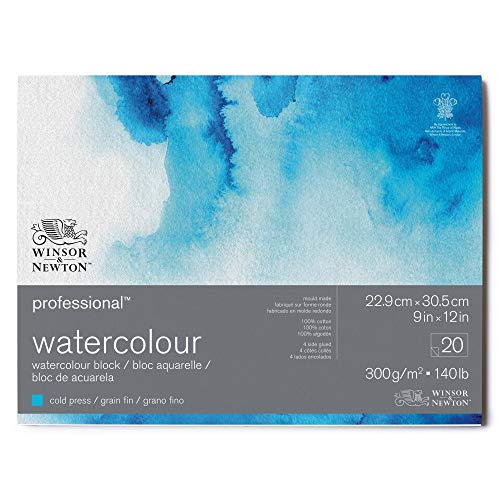
Winsor & Newton Professional is a paper that rarely gets the attention it deserves. Made in a traditional mould-made process with 100% cotton and gelatine sizing, it quietly delivers a painting experience that rivals papers costing significantly more. In our testing, wet-on-wet techniques were an absolute joy. Water sits on the surface just long enough to allow controlled blending before it begins to absorb, giving you a generous working window without the paint sliding around uncontrollably. We were particularly impressed with how it handles lifting. Even twenty minutes after applying a wash of French Ultramarine, we were able to pull color back cleanly with a damp brush, leaving sharp highlights. Glazing performance is top tier as well. We built up six thin transparent layers of Quinacridone Rose and the underlying washes stayed perfectly undisturbed. The cold press texture is refined without being too smooth, striking a nice balance for both loose expressive work and tighter detailed passages. The main downside is availability. You will not find this in every art store, and online prices can vary quite a bit. Drying time is also on the slower side, so if you prefer working quickly in layers, you will need patience or a hairdryer. For anyone willing to seek it out, this paper is a genuine sleeper pick among professional watercolorists.
Pros
Stays workably wet through extended wet-on-wet sessions without the surface turning slick
Gelatine sizing enables clean lifting on dried pigment, including 20 minutes after application
Consistent mould-made texture with a refined cold press grain
Glazed layers stay distinct and undisturbed through 6 successive washes
Block format stays perfectly flat without taping or stretching
Cons
Less widely available in art stores compared to Arches or Fabriano
Drying time is noticeably slower, which can frustrate faster painters
Higher price than some equally capable alternatives
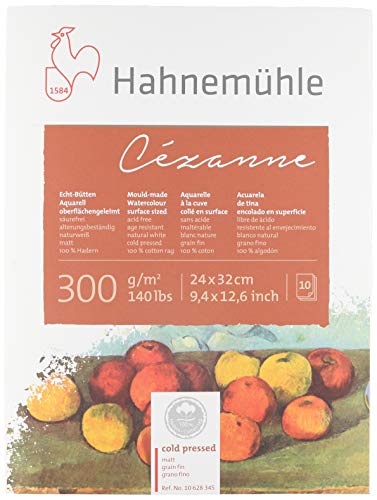
Hahnemuhle Cezanne is 100% cotton, mould-made paper with a cold press surface that sits noticeably finer and more uniform than most competitors. That consistency is where it earns its reputation. We painted a botanical study with tiny vein structures in the leaves, and the brush held its point and tracked perfectly across the surface with zero skipping or bleeding. But do not mistake the refined grain for weakness in wet techniques. We ran heavy wet-on-wet washes across a full sheet and the paper absorbed evenly without buckling, even without being stretched. The gelatine sizing is tuned well. Lifting is clean and precise, scrubbing is forgiving, and glazed layers build up with clarity. We stacked five glazes of Transparent Pyrrol Orange and each layer remained distinct. The natural warm white of the paper makes colors read cleanly rather than appearing cold or stark. The only real barrier is cost. At the upper end of the price range, this is clearly positioned as a professional paper, and casual painters may not want to spend this much per sheet. The slightly finer texture also means granulating pigments separate less dramatically than on Arches, which can disappoint painters who rely on that effect. For serious botanical, architectural, or portrait work where precision matters, the Cezanne is hard to beat and has become our first choice when detail is the priority.
Pros
Outstanding surface for fine detail and controlled brushwork
Sheet-to-sheet texture and absorption are nearly identical across the entire pad
Gelatine sizing is well-calibrated for both wet and dry techniques
Holds up through repeated scrubbing and lifting without surface breakdown
Natural warm-white tone that keeps colors looking clear rather than stark
Cons
Premium pricing puts it out of reach for casual or student painters
Cold press grain may feel slightly less textured than Arches for expressive work
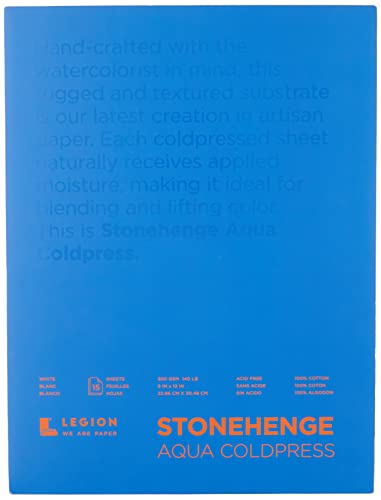
Legion Stonehenge Aqua occupies a unique niche in the watercolor paper world thanks to its synthetic sizing, which makes it a standout choice for mixed media artists. Where most cotton papers use traditional gelatine, the synthetic alternative here gives the surface different absorption characteristics. Water sits slightly differently on the surface, and you will notice that pigment sinks into the fibers a bit more permanently. This is actually an advantage if you plan to layer other media on top. We tested it with watercolor washes followed by colored pencil detailing, ink line work, and even light gouache highlights, and every medium bonded to the surface cleanly without any adhesion issues. For pure watercolor technique, wet-on-wet works well but the working window is a touch shorter than gelatine-sized papers. You need to move a bit faster. Glazing is solid, with layers building up cleanly, though the colors read slightly more matte than they would on a paper like Arches. The biggest trade-off is lifting. Once a wash has fully dried, pulling color back is considerably harder than on gelatine-sized surfaces. You can still make corrections, but it requires more effort and a stiffer brush. For painters who work exclusively in watercolor, there are better-optimized choices. If your workflow involves multiple media, or you want a paper that locks in your watercolor layers before adding other materials on top, the Stonehenge Aqua is genuinely excellent and hard to replace.
Pros
Synthetic sizing makes it well suited for mixed media applications
Takes ink, colored pencil, and gouache cleanly alongside watercolor
Smooth yet toothy surface that works well for both fine lines and broad washes
American-made with excellent quality control and consistency
Extremely durable surface that withstands heavy reworking
Cons
Synthetic sizing behaves differently from gelatine, requiring an adjustment period
Lifting is noticeably harder once paint has fully dried and set
Color intensity can appear slightly flatter than gelatine-sized papers
Fluid 100 is the paper we point people toward when they tell us they cannot afford Arches but want real cotton. At its price point, few other options deliver this level of performance. The 100% cotton, mould-made construction gives it a genuine professional feel, and the gelatine sizing works well enough that you can lift color, glaze in layers, and run wet-on-wet washes with real confidence. We painted a full landscape on a block sheet without any stretching or taping, and the paper stayed reasonably flat throughout, only showing minor cockling during the heaviest wash application. Lifting worked well when we pulled color within the first few minutes. After full drying, it was still possible but required more pressure. Glazing performance was solid. We layered four washes of Phthalo Blue and each read distinctly without muddying. Where you notice the budget positioning is in consistency. We have had sheets from different packs that felt slightly different in texture and absorption. The surface is also a bit less resilient under heavy scrubbing, so if you make a mistake and need to really work the paper, you will hit the fibers sooner than you would on Arches or Hahnemuhle. For the price, these are completely acceptable compromises. If you are an intermediate painter building skills or a professional who goes through a lot of paper for studies and practice, Fluid 100 is a smart, practical choice. Skip it if surface consistency is critical to your process.
Pros
Lowest price point for genuine 100% cotton mould-made paper
Gelatine sizing performs surprisingly well for lifting and corrections
Block format lies flat and eliminates the need for stretching
Handles wet-on-wet washes with minimal buckling at this weight
Cons
Sheet-to-sheet consistency can vary slightly between production batches
Surface is a bit more fragile under aggressive scrubbing than pricier options
Cold press texture is somewhat irregular compared to premium papers
Every paper on this list was tested in 140 lb (300 gsm) cold press format under identical conditions. We taped quarter-sheet pieces to a rigid board and ran each through five core exercises: a graduated wash from full saturation to clean water (which reveals how evenly the paper absorbs and releases pigment), a wet-on-wet bloom test where concentrated pigment dropped into a pre-wetted area, a lifting test using a clean damp flat brush pressed into a dried wash, a scrubbing test with a stiff synthetic brush to see how much abuse each paper could take before pilling or tearing, and three layers of transparent glazing to evaluate whether colors stayed luminous or went muddy.
We also noted how each paper handled masking fluid removal, how quickly it dried indoors, and how the surface felt under both round and flat brushes. Two experienced watercolorists who paint regularly in studio and plein air settings did the evaluation.
Paper weight: why 140 lb is the sweet spot
Paper weight directly affects how your sheet handles water. A 90 lb (190 gsm) sheet will buckle and warp the moment you lay down a generous wash unless you stretch it first, and even stretched lightweight paper can cockle in humid conditions. At the other end, 300 lb (640 gsm) paper sits nearly flat under any amount of water and feels like painting on a board, but the price per sheet runs roughly four times that of 140 lb.
For most painters, 140 lb (300 gsm) is the right call. It resists moderate buckling without stretching, especially when taped on all four edges or used in a block format. It absorbs enough water for full wet-on-wet work but dries at a manageable speed. And it costs roughly half what 300 lb sheets run, which matters when you are doing studies or any painting that might not work out.
Surface texture is the second most consequential choice after material. Cold press watercolor paper has a moderate tooth created by pressing the wet sheet between cold rollers. That texture traps pigment in tiny valleys, which produces visible granulation and gives dry brush strokes a characteristic broken look. Cold press is the default for good reason: it works well for landscapes, florals, abstracts, and nearly any subject that benefits from a lively surface.
Hot press watercolor paper is pressed between heated rollers, which flattens the surface to a smooth finish. Paint glides across it with minimal granulation. This makes it excellent for botanical illustration, detailed portraiture, and pen-and-ink work with watercolor washes. That said, hot press is less forgiving. Washes can look streaky if your brush control is not confident, and wet-on-wet work is harder to manage because the smooth surface offers less resistance to spreading pigment. Most painters who are earlier in their development find cold press much easier to work with.
Rough paper has the most pronounced tooth. Pigment settles deep into the texture, and even a medium-loaded brush will skip across the peaks, leaving white specks that create a sparkle effect prized in landscape and seascape work. It is a specialty surface. Unless you specifically want that heavily textured look, cold press covers most needs. Our paper types explained guide goes into the full comparison.
Cotton vs wood pulp: what actually matters
This is where the real performance gap lives. Cotton fiber papers absorb water in a fundamentally different way than cellulose (wood pulp) papers. Cotton fibers swell and hold water within the fiber structure, which means moisture distributes evenly and gives you a longer working window for wet-on-wet techniques. When you drop pigment into a damp area on cotton paper, the bloom spreads in a soft, controlled way. On a cellulose sheet, the same application often produces hard, jagged edges because wood fibers resist absorption and push water sideways along the surface.
The practical differences stack up fast. Cotton papers allow clean lifting. Lay down a wash, let it dry, come back with a damp brush to pull out highlights, and you get a crisp bright lift with no surface damage. Try the same on most cellulose papers and the fibers pill or tear, leaving a rough spot that accepts pigment differently on subsequent layers. Cotton also handles multiple glazing layers well. You can build up five, six, even eight transparent layers on Arches or Fabriano Artistico and the colors stay luminous. Wood pulp papers start looking dull and overworked after three or four layers because the sizing breaks down.
That said, cellulose papers have their place. For practice work, color mixing studies, and technique drills, spending premium cotton prices is wasteful. A pad of Strathmore 400 or Canson XL lets you paint freely without worrying about cost per sheet. Arches is the default for a reason, but Fabriano does 90% of the same job for less.
Sizing: the hidden factor
Sizing is the starch or gelatin treatment applied to watercolor paper that controls how water and pigment interact with the fibers. It is the most underappreciated variable in paper performance, and it varies substantially between brands. Paper with strong internal sizing allows water to sit on the surface longer, giving you more time to manipulate wet washes, soften edges, and blend. Paper with weak sizing absorbs water too quickly, leaving you with hard edges and less control.
Arches uses a robust gelatin sizing that gives it the longest working window of any paper we tested. We clocked wet-on-wet blooms staying workable for around 90 seconds longer than they did on cellulose papers at the same ambient temperature. Fabriano Artistico uses a lighter sizing that absorbs slightly faster, which some painters actually prefer when they want the paint to settle quickly. Saunders Waterford falls in between. On the budget end, cellulose papers like Canson XL have synthetic sizing that breaks down faster under repeated wetting and scrubbing, which is a key reason professional papers outperform student papers over multiple layers.
You cannot see sizing, but you feel it immediately when you paint. If your washes are drying before you can blend them, or if your wet-on-wet edges are too hard, weak sizing is likely the culprit.
Blocks vs pads vs loose sheets
The format you buy affects both your workflow and your per-sheet cost. Watercolor blocks are glued on all four edges, which holds the paper taut and flat as you paint. You work on the top sheet, let it dry completely, then slide a palette knife into the small gap to separate it. Blocks are ideal for plein air and for any situation where you do not want to bother with stretching or taping. The downside is cost: blocks are typically 30 to 40 percent more expensive per sheet than the same paper in loose sheet form.
Pads are spiral-bound or tape-bound on one edge. They are the cheapest format and the most convenient for quick studies, but single-edge binding means the paper can buckle freely on the other three sides when wet. If you paint with heavy washes on a pad, expect warping. Some artists tear sheets from the pad and tape them down, which solves the problem but adds a step.
Loose sheets give you the best value per square inch and the most flexibility in sizing your work. A full 22 x 30 inch sheet can be cut into any configuration you need. The tradeoff is that loose sheets need to be stretched (soaked and stapled to a board) or taped firmly on all edges to prevent buckling. For studio work, loose sheets are the most economical way to use premium paper. For outdoor painting or casual sessions, blocks save time and hassle.
Store watercolor paper flat, away from humidity and direct sunlight. Cotton papers are archival and will last for decades if stored properly, but moisture exposure can cause mold growth and UV light will degrade the sizing over time.
Frequently asked questions
What is the best watercolor paper overall?
Arches Cold Press 140 lb is widely considered the gold standard. Its 100% cotton construction, consistent sizing, and excellent wet-on-wet performance make it the top choice for most watercolorists. It handles lifting, scrubbing, and multiple glazing layers without pilling.
Do I need 100% cotton watercolor paper?
Not necessarily. Beginners can start with wood pulp papers like Strathmore 400 Series, which cost significantly less. But 100% cotton papers absorb water more evenly, allow better lifting, and withstand more manipulation. As you develop your technique, upgrading to cotton is worthwhile.
What weight should beginners use?
Start with 140 lb (300 gsm) paper. It is heavy enough to resist buckling with moderate washes without needing to be stretched first. Lighter papers like 90 lb will warp badly, and 300 lb is expensive overkill for practice work.
What is the difference between cold press and hot press watercolor paper?
Cold press has a textured surface that catches paint in the valleys, ideal for landscapes, loose washes, and most techniques. Hot press is smooth, suited for detailed botanical illustration, pen and ink work, and portraits. Most artists start with cold press for its versatility.
Is Arches watercolor paper worth the price?
Yes, for serious work. Arches consistently performs at the highest level for wet techniques, lifting, and archival quality. For practice and experimentation, use a more affordable paper like Canson XL or Strathmore 400, and save Arches for finished pieces.
Can I use both sides of watercolor paper?
With most professional papers, yes. Arches and Fabriano Artistico both have usable front and back sides. The texture may differ slightly between sides. Wood pulp papers generally do not perform well on the reverse side.
What does GSM mean for watercolor paper?
GSM stands for grams per square meter and measures paper weight. Higher GSM means thicker, more absorbent paper. Common weights are 190 gsm (90 lb), 300 gsm (140 lb), and 640 gsm (300 lb). Most artists prefer 300 gsm (140 lb) as the standard working weight.
Should I use watercolor paper blocks or pads?
Blocks are glued on all four sides, keeping paper flat while you paint. Convenient for plein air and no stretching needed. Pads are cheaper but sheets may buckle. Loose sheets offer the most flexibility and best value per sheet for studio work, but require stretching or taping.